Hospital Emergency Departments in Thailand
Compare 24-hour emergency departments, their direct lines and how to reach them.
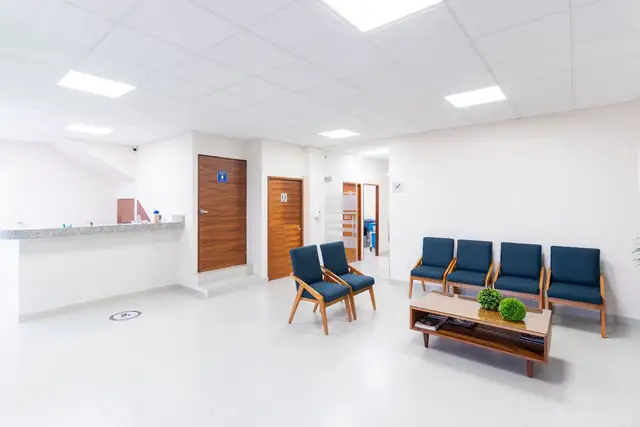



 14 providers in Thailand
What we compare
Each hospital emergency departments comparison looks only at what providers publish about:
- 24-hour emergency department
- Direct emergency line
- Ambulance and transfer service
- Trauma or cardiac capability
Providers are not ranked by quality and none pay to appear. How we review
Comparisons
All comparisons- 14 Best Hospital Emergency Departments in ThailandNationwide · 14 providers
- 6 Best Hospital Emergency Departments in BangkokBangkok · 6 providers
- 3 Best Hospital Emergency Departments in Chiang MaiChiang Mai · 3 providers
- 3 Best Hospital Emergency Departments in PhuketPhuket · 3 providers
Providers by city
Bangkok 6
- Bangkok Hospital (Headquarters)Private tertiary hospital
- BNH HospitalPrivate hospital
- Bumrungrad International HospitalPrivate tertiary hospital
- MedPark HospitalPrivate tertiary hospital
- Samitivej Sukhumvit HospitalPrivate tertiary hospital
- Siriraj HospitalPublic university teaching hospital
Chiang Mai 3
- Bangkok Hospital Chiang MaiPrivate tertiary hospital
- Chiangmai Ram HospitalPrivate hospital
- Maharaj Nakorn Chiang Mai HospitalPublic university teaching hospital
Phuket 3
- Bangkok Hospital PhuketPrivate tertiary hospital
- Bangkok Hospital SirirojPrivate hospital
- Dibuk HospitalPrivate hospital
Pattaya 2
- Bangkok Hospital PattayaPrivate tertiary hospital
- Pattaya Memorial HospitalPrivate hospital
Guides on hospital emergency departments
HIV PEP and PrEP in Thailand: where to get them and how quickly
Where to get HIV PEP and PrEP in Thailand, including the Thai Red Cross Anonymous Clinic in Bangkok, with timings, opening hours and published test fees.
Food poisoning in Thailand: what to do and when to see a doctor
How to manage vomiting and diarrhoea while travelling in Thailand, the warning signs that mean you should see a doctor or call 1669, and how to lower your risk.
Jellyfish stings in Thailand: box jellyfish, vinegar stations and first aid
What to do after a jellyfish sting at a Thai beach, why vinegar is used for box jellyfish, when to call 1669, and how to reduce the risk of being stung.
Motorbike accidents in Thailand: medical care, insurance and the police
After a scooter or motorbike accident in Thailand: first steps at the scene, getting medical care, reporting to the police and what insurers usually need.
Heat exhaustion and heatstroke in Thailand: signs, first aid and when to call 1669
Heat exhaustion versus heatstroke, first aid advised by Thailand's Department of Disease Control, who is most at risk and staying safe in the hot season.
Snake bites in Thailand: first aid, antivenom and what not to do
What to do after a snake bite in Thailand, the traditional remedies to avoid, how hospitals decide on antivenom, and the Thai Red Cross's role in producing it.
Diving injuries in Thailand: decompression sickness, oxygen and hyperbaric chambers
Recognising decompression illness after a dive in Thailand, the first aid divers should know, how recompression works and what to check before you dive.
How to compare hospital emergency departments in Thailand
Nobody chooses an emergency department in the moment; the choice is made, or not made, in the days before. Knowing which 24-hour department is nearest, what it can treat on site, how to reach it and how it expects to be paid saves time when time matters most.
This guide explains what to do in an emergency in Thailand, how to compare emergency departments in advance, and how payment usually works. It is general information, not medical advice: in a life-threatening emergency, call 1669 and follow the call handler's instructions.
What to do in an emergency
Thailand's medical emergency number is 1669. The UK government describes it as a free Ministry of Public Health service that usually transfers callers to the nearest available hospital, and the national emergency medical system is coordinated by the National Institute for Emergency Medicine. If someone is seriously ill or injured, call 1669 first, give the location as precisely as you can and describe what has happened.
Other numbers listed by the UK government are 191 for the Royal Thai Police and 1155 for the Tourist Police, who can also help with translation. For an urgent problem that is not life-threatening, such as a suspected fracture or a deep cut, going straight to a suitable emergency department may be quicker than waiting for an ambulance.
- 1669 — medical emergency (free)
- 191 — Royal Thai Police
- 1155 — Tourist Police, including help with translation
- The direct emergency line of the hospital nearest to where you are staying
Hospital ambulances and the 1669 service
Many private hospitals run their own ambulances and publish a direct emergency or ambulance number. The UK guidance notes that there is usually a fee for a private ambulance. A hospital's own ambulance will normally take you to that hospital, while 1669 usually routes you to the nearest available one, which may be public or private.
Some hospitals list ambulances equipped as mobile intensive or coronary care units, helicopter transfer or, on the coast, a sea ambulance. These matter most if you live or travel somewhere remote, such as an island or a rural district, where the nearest hospital may not be able to treat serious injuries.
Choosing an emergency department in advance
Start with distance and traffic, then capability. A department that is open 24 hours is not the same as one that can manage every emergency on site. Look for what the hospital publishes: specialists on call, round-the-clock CT or MRI, an intensive care unit, a 24-hour cardiac catheterisation laboratory for heart attacks, a stroke pathway, and any trauma-centre verification. Ask which cases it transfers elsewhere, and where to.
The UK guidance warns that many government facilities outside Bangkok and the provincial capitals, particularly on the southern islands, are not equipped for major trauma. Large public and university hospitals, by contrast, often act as regional referral centres but may have longer waits and fewer English-speaking staff.
On arrival: triage and what to bring
Emergency departments see patients in order of clinical urgency, not arrival time, so a less serious case may wait. Tell the triage nurse clearly about symptoms such as chest pain, breathlessness, sudden weakness or heavy bleeding.
Bring the patient's passport: the UK government states it is required for treatment at both public and private hospitals. Bring insurance details with the insurer's 24-hour assistance number, and a list of current medicines, allergies and conditions, ideally in English with generic drug names.
Payment, deposits and guarantees
Treatment is rarely free, even in an emergency, and the UK travel advice states that hospitals require a guarantee of payment before treating patients. Contact your insurer or its assistance company as soon as you can and ask it to deal with the hospital directly. Self-funded patients should expect a deposit, especially on admission, and may receive regular, sometimes daily, invoices.
Thailand's UCEP scheme covers patients in a critical, life-threatening condition. Under rules revised in September 2026, hospitals must treat such patients without making care conditional on payment for the first 72 hours, with those costs claimed from the National Health Security Office. Whether a case is critical is decided at triage, patients with other insurance must use it first, and reports do not say how the scheme applies to foreign visitors, so it is no substitute for insurance.
After the emergency
Before you leave, ask for a medical report in English, copies of any imaging, an itemised bill and the receipts; your insurer will usually need all of them. If you are admitted and need to travel home, ask early about fit-to-fly paperwork and who arranges transfer or repatriation.
Questions to ask before you book
- Is the emergency department open 24 hours every day, including public holidays?
- What is the direct emergency or ambulance number, and is it answered in English?
- Does the ambulance carry a doctor or nurse, and what does a call-out cost?
- Which specialists are on call overnight, and is CT or MRI available at all hours?
- Is there a 24-hour cardiac catheterisation laboratory and a stroke pathway?
- Which emergencies do you transfer to another hospital, and which one?
- Do you accept a guarantee of payment from my insurer, and can the emergency team contact it for me?
- If I pay myself, what deposit is needed for emergency treatment or admission?
- Are interpreters available in the emergency department at night?
- Is there a separate paediatric emergency service for children?
- Will I receive a medical report in English and an itemised bill when I leave?
Warning signs
- No published emergency number, or a number that differs between the hospital's own pages with no explanation.
- A department described as 'emergency' that keeps only daytime or evening hours.
- No clear answer on which cases are transferred elsewhere.
- Pressure to pay or sign for extra treatment before a critical patient has been stabilised.
- Reluctance to give an itemised bill, receipts or a medical report for your insurer.
Sources for this guide (7)
- GOV.UK — Healthcare and medical services in Thailand
- GOV.UK — Thailand travel advice: Getting help
- GOV.UK — Thailand travel advice: Health
- Australian Embassy Thailand — Medical information
- WHO South-East Asia — National Institute for Emergency Medicine (institute details)
- National Institute for Emergency Medicine (1669)
- The Star (The Nation/ANN) — Thai Cabinet revises 72-hour emergency care rules, 15 September 2026
General information, not medical advice. Confirm details directly with the provider. Spotted something out of date? Suggest a correction.